
The market exists. The marketplace doesn’t.
Top of the Book makes financial relationships visible enough to create a market, private enough to protect their value, and structured enough to actually get deals done.
Top of the Book · Six stops · A concept walkthrough, not the live platform · Prepared August 2026
Six stops. One mechanism.
The first stop names the problem this replaces — the fragmented, relationship-only market that fragmented merchant acquiring still runs on. The second lays out the four-layer model that is Top of the Book’s actual answer. The third, fourth and fifth walk each working part — the passport, the lockbox, the match. The sixth closes on where this goes if it works.
This tour explains a mechanism. It is not the marketplace itself, and nothing on it is a live listing. Every portfolio, acquirer, and figure shown is a constructed example, built to make the mechanism concrete rather than abstract.
The tour
Six stops, in order. Each one takes a few minutes and ends pointing at the next.
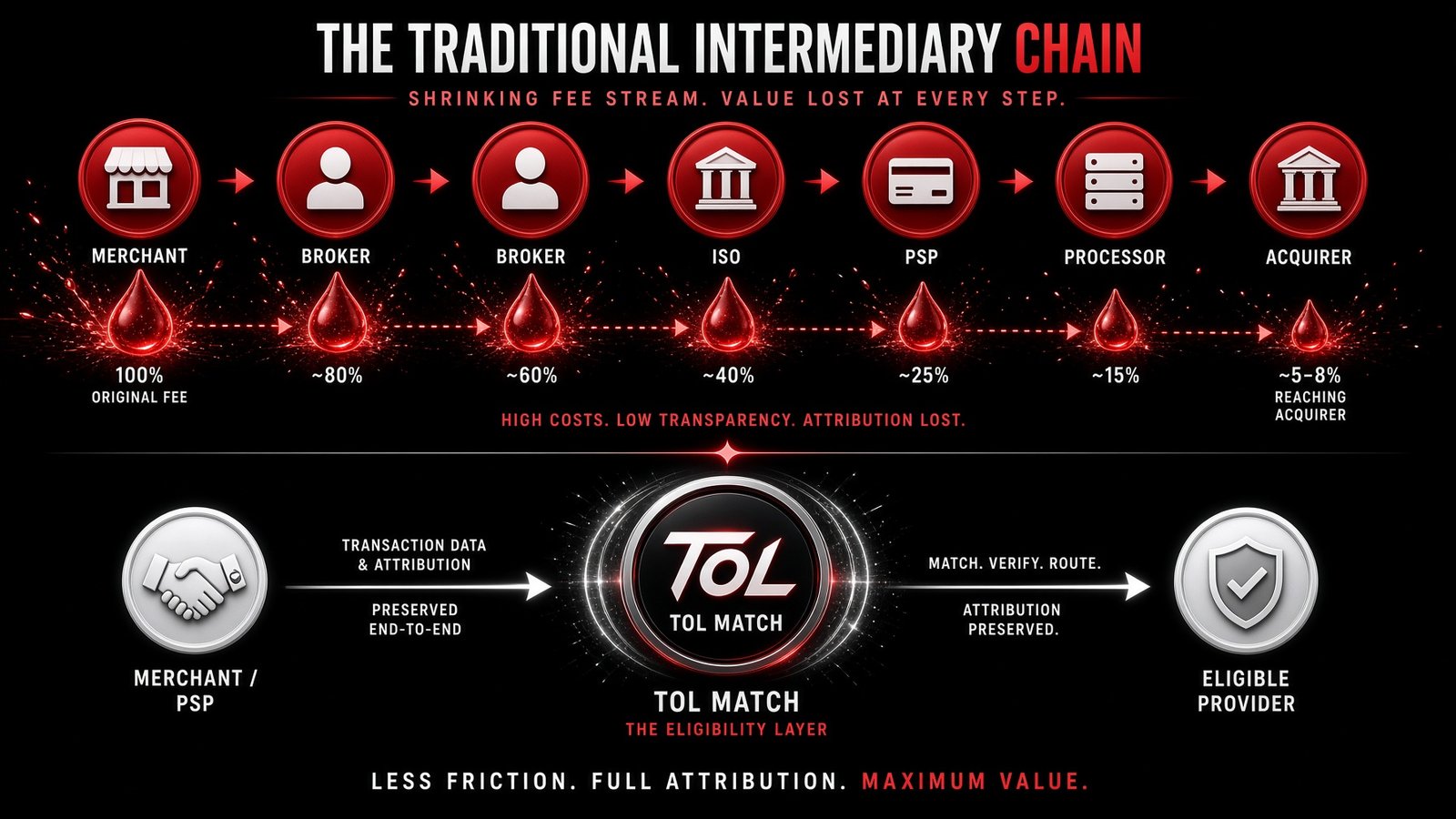
Stop 1The problem
The Chaos
Fragmented merchant acquiring still runs like a private broker market. Unknown jurisdiction fit, duplicate introductions, unverifiable claims, and viable deals that die before underwriting.
Take this stop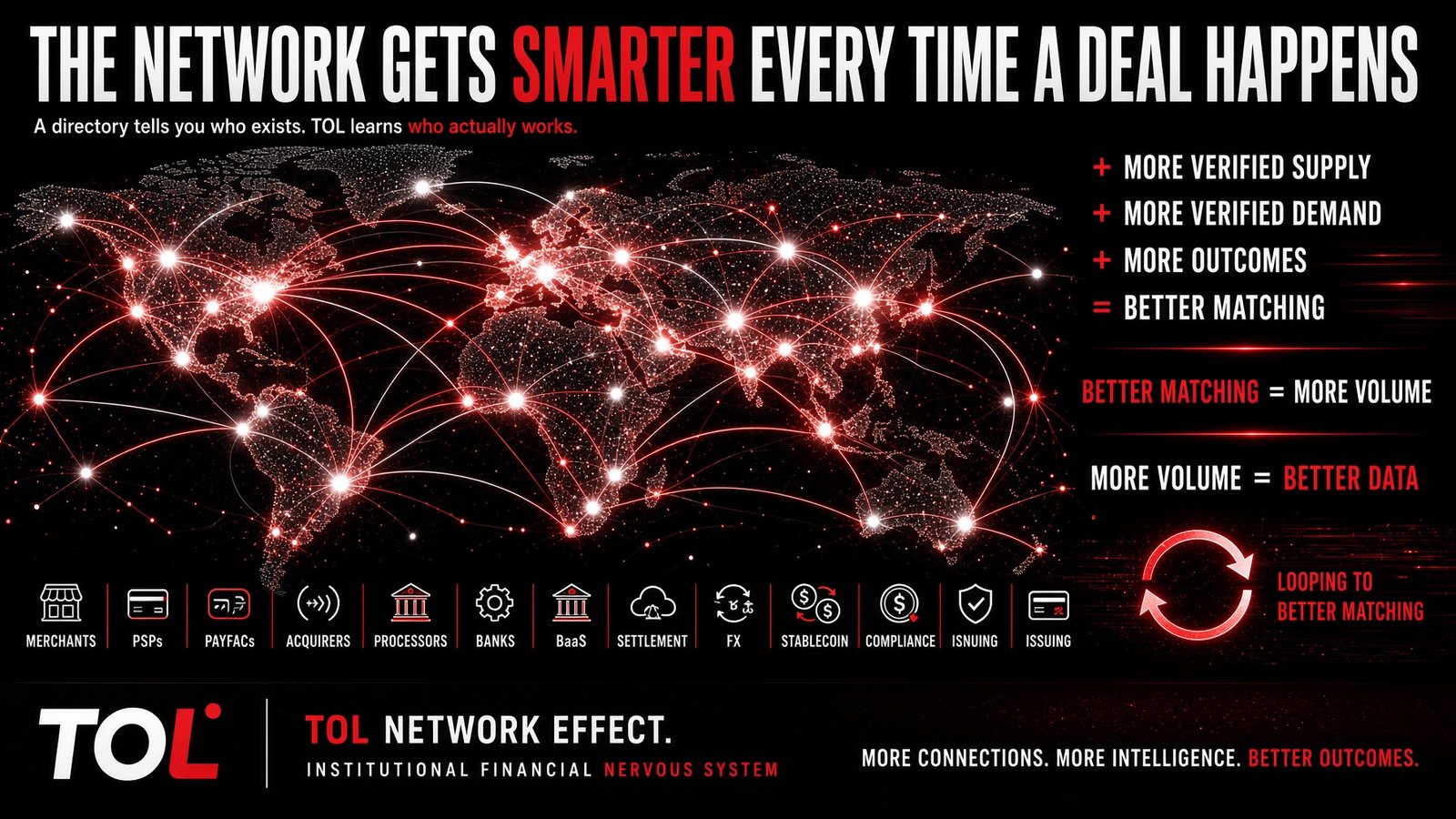
Stop 2The model
The Four-Layer Model
Top of the Book’s thesis: a closed but visible institutional marketplace. Visible at the market level, private at the deal level. The four layers that make that possible, in order.
Take this stop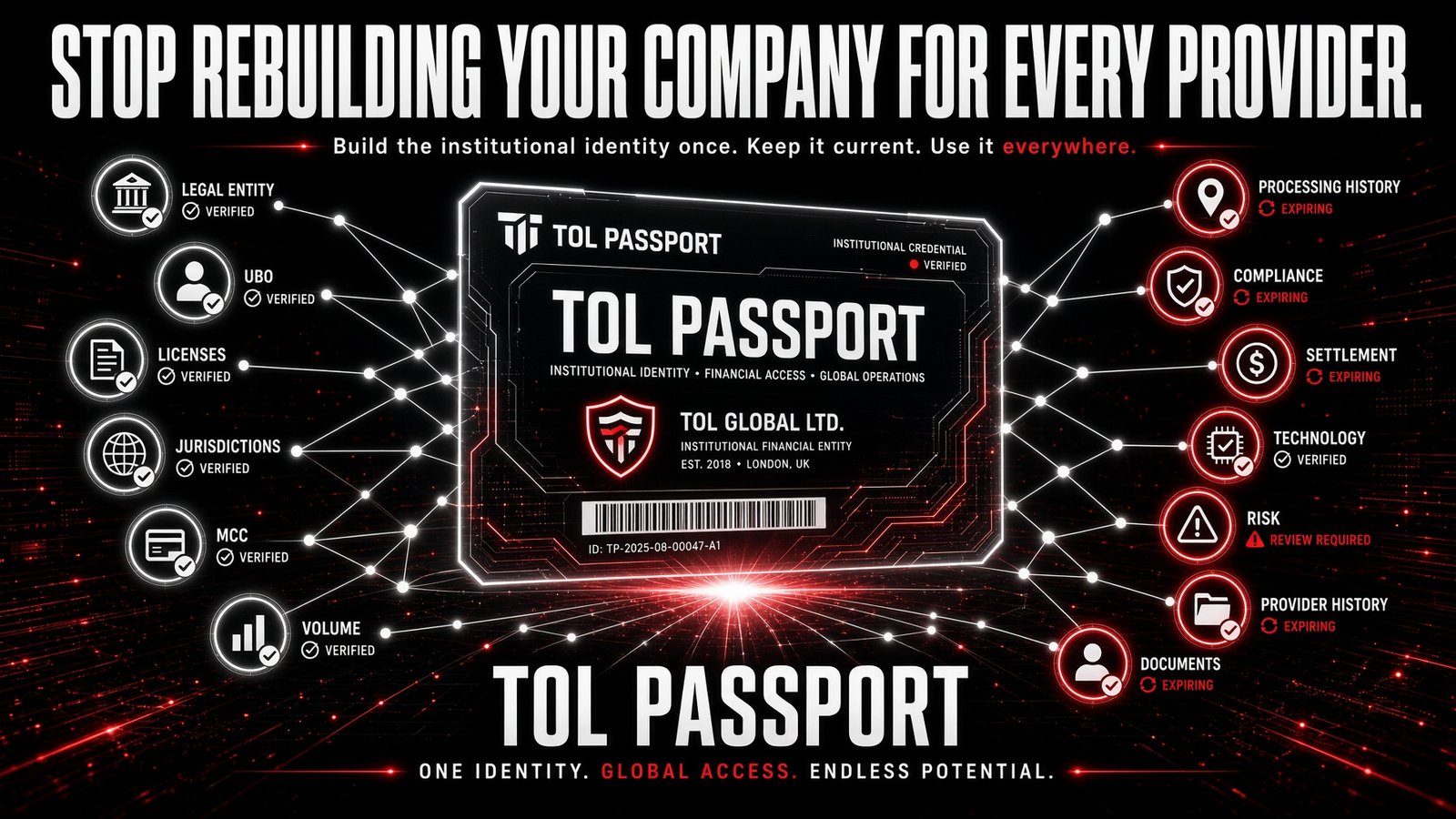
Stop 3The identity layer
The Top of the Book Passport
A reusable corporate financial identity — a patient passport for corporate financial health. Build the diligence file once. Every data point carries its own provenance and expiry.
Take this stop
Stop 4The private layer
Lockbox & Attribution
How a relationship enters the market sealed — visible as inventory, private in its contents. Fair attribution from history, proximity, evidence and time, never a race to type a name first.
Take this stop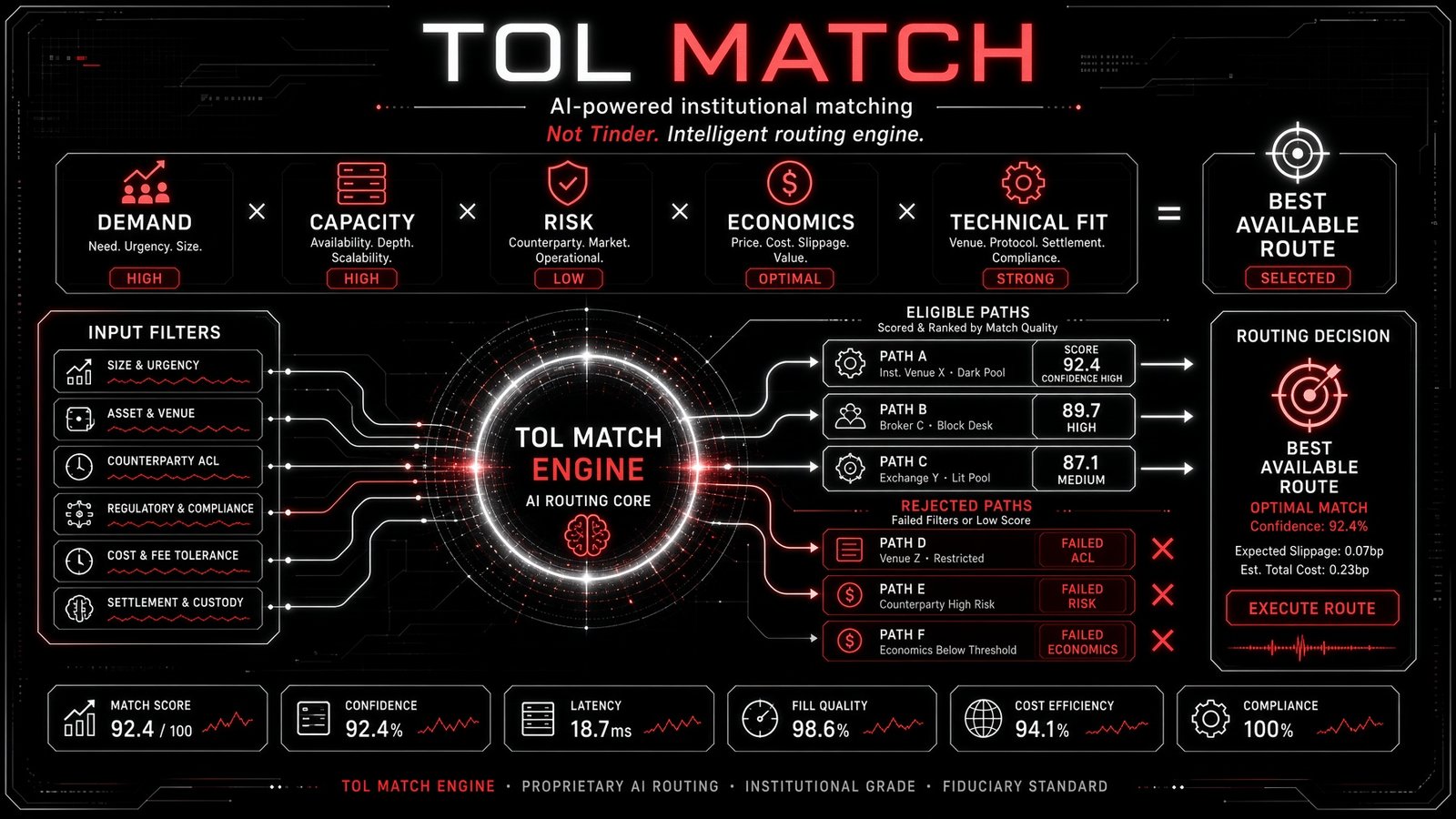
Stop 5The execution layer
Matching & Economics
Eligibility first, then ranking among eligible routes. Why the best route is not the cheapest route, and how humble margins at scale beat maximizing any single deal.
Take this stop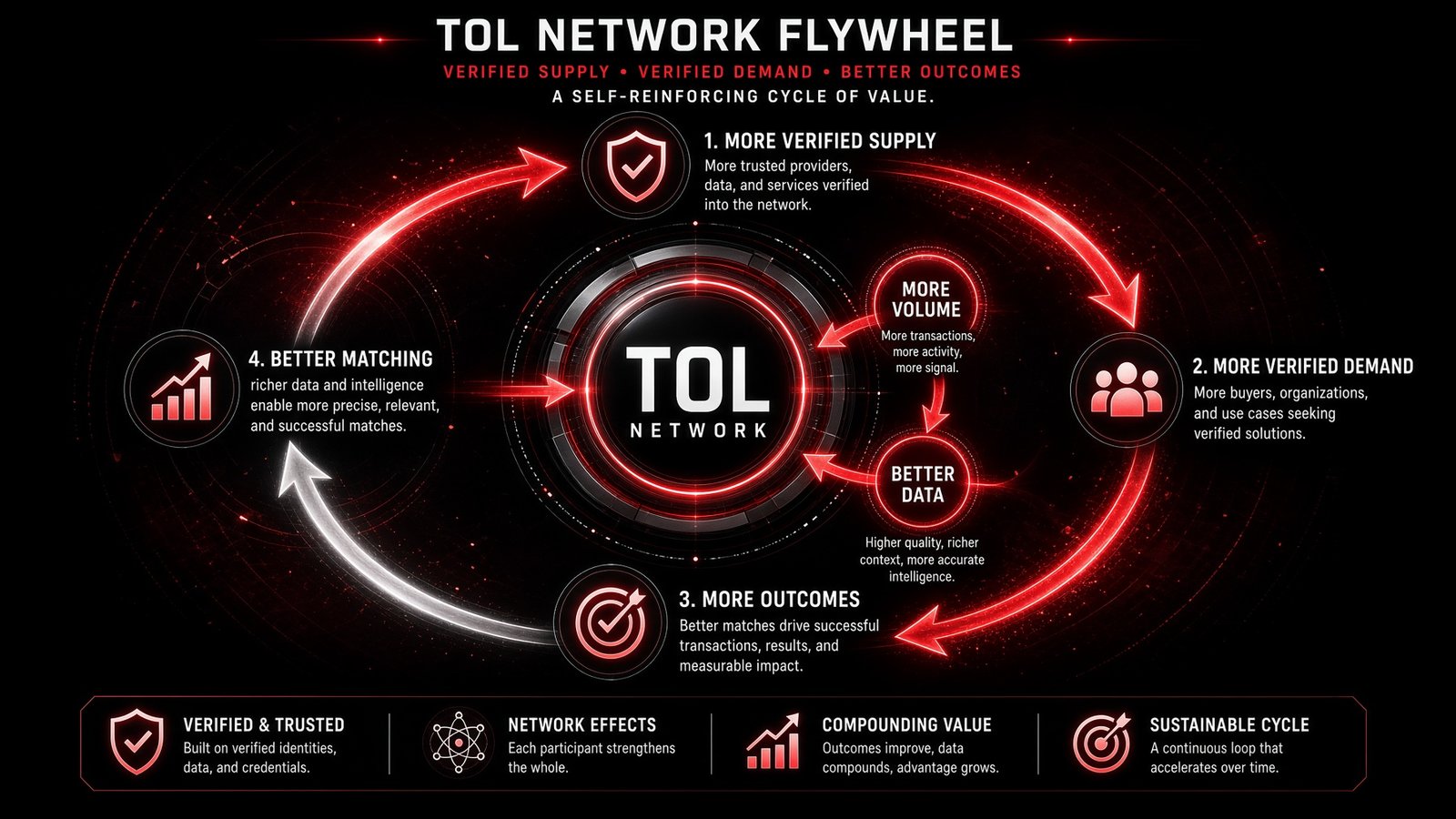
Stop 6The close
The Flywheel
The network effect, the expansion path beyond merchant acquiring, and where infrastructure providers fit — without Top of the Book becoming the middleman it was built to remove.
Take this stopShort on time?
Start where the argument is. The model is the page that carries the thesis; everything else is one working part of it.
One
If you read one stop: Stop 2. The thesis and the four-layer model.
Two
If you read two: Stop 2, then Stop 5 — the model, then how a match actually clears.
Then Stop 1 for the problem this replaces, Stop 3 and Stop 4 for the identity and private layers, and Stop 6 for where it goes next.
What this tour is, and isn’t
Kept deliberately plain, because a marketplace pitch that oversells its own maturity is exactly the kind of noise Top of the Book exists to filter out.
- This is an explainer, not the platform. The Top of the Book marketplace is not live. This tour walks through the mechanism and the argument for it — building it is a later phase.
- Every counterparty is fictional. “Merchant Portfolio #MP-184,” “PSP A,” “Acquirer B” — none of these name a real company. Any resemblance to one is coincidental.
- Every figure is a worked example. Sealed-relationship counts, capacity numbers, match scores — all illustrative, tagged where they appear, never presented as measured or reported.
- No fabricated statistics stand in for real research. Where this tour makes a claim about how markets or incentives behave, it is reasoned argument, not a disguised statistic.
- “Leave the slop at the door” applies to this package too. Confident and specific beats breathless and vague — here as much as inside the mechanism itself.
- Attribution is never ownership. Wherever this tour describes a contributor being credited for a relationship, that credit is a contractual participation right — never a claim of ownership over another company or person.