Stop 3 of six
Trust once. Use it everywhere.
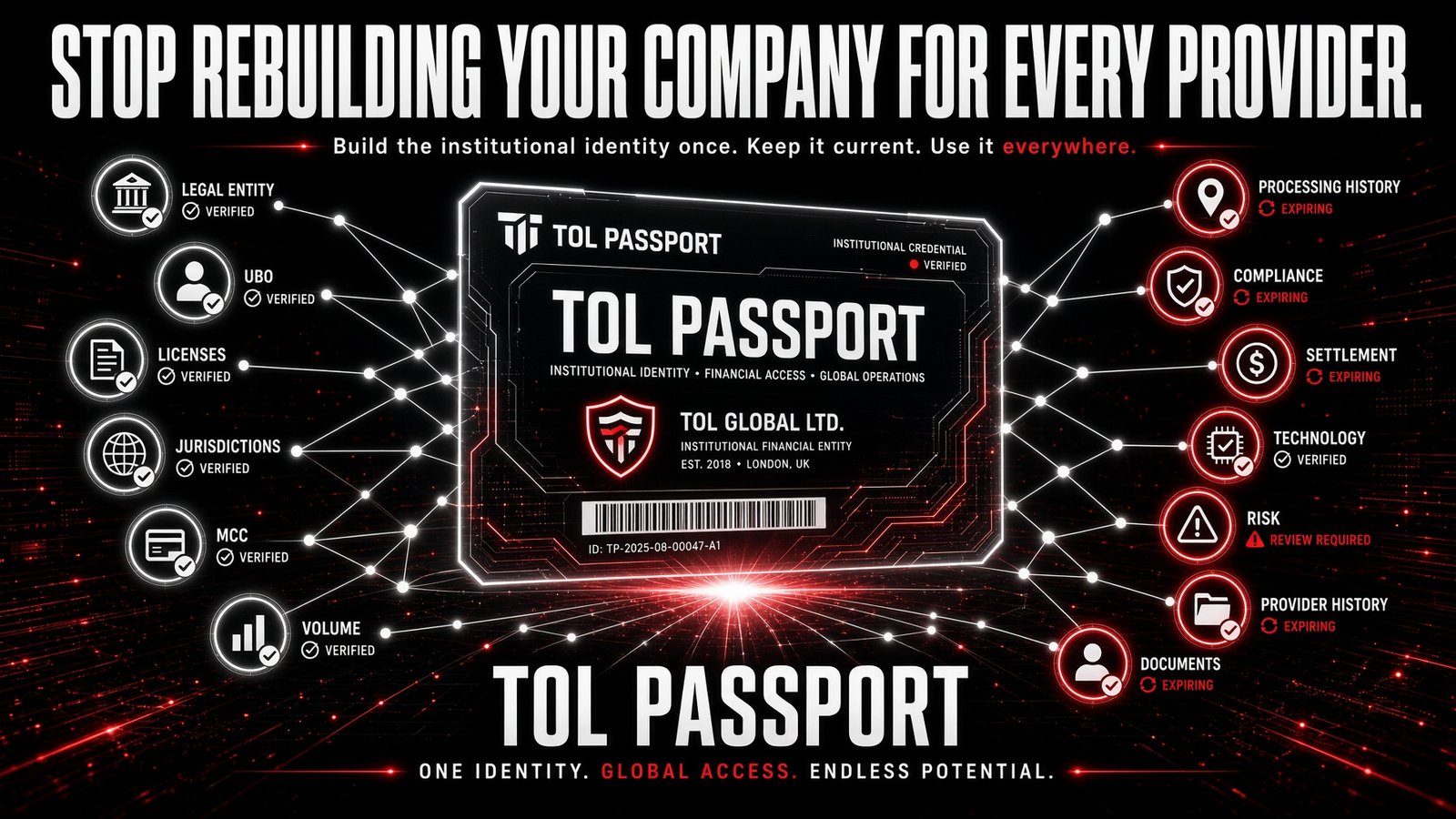
A patient passport for corporate financial health. Instead of rebuilding the diligence file from zero for every acquirer, bank, or PSP, validated evidence becomes portable — and every data point carries its own provenance and expiry.
The file you keep rebuilding
Every serious counterparty relationship starts with the same ritual: legal entity documents, UBO disclosure, licenses, processing history, a risk questionnaire, bank statements, sometimes the same PDF emailed to three different underwriters in the same month because none of them can see what the other two already verified.
None of that diligence is wasted the first time. It is wasted every time after — rebuilt from zero for the next acquirer, the next bank, the next PSP, because there has never been anywhere for a verified fact to live once it has been checked.
A patient passport works differently. A hospital does not re-run your entire medical history at every visit — it pulls the record, checks what has changed, and moves on. The Top of the Book Passport is the same idea applied to corporate financial identity: verify once, carry the evidence, let every future counterparty check it instead of re-collecting it.
92
Readiness score — a single composite figure summarizing how complete and current a passport is. Illustrative, portfolio MP-184.
6
Jurisdictions covered by verified licenses and processing history on this passport. Illustrative
14
Evidence documents attached and provenance-stamped, from registry extracts to compliance attestations. Illustrative
What a passport actually holds
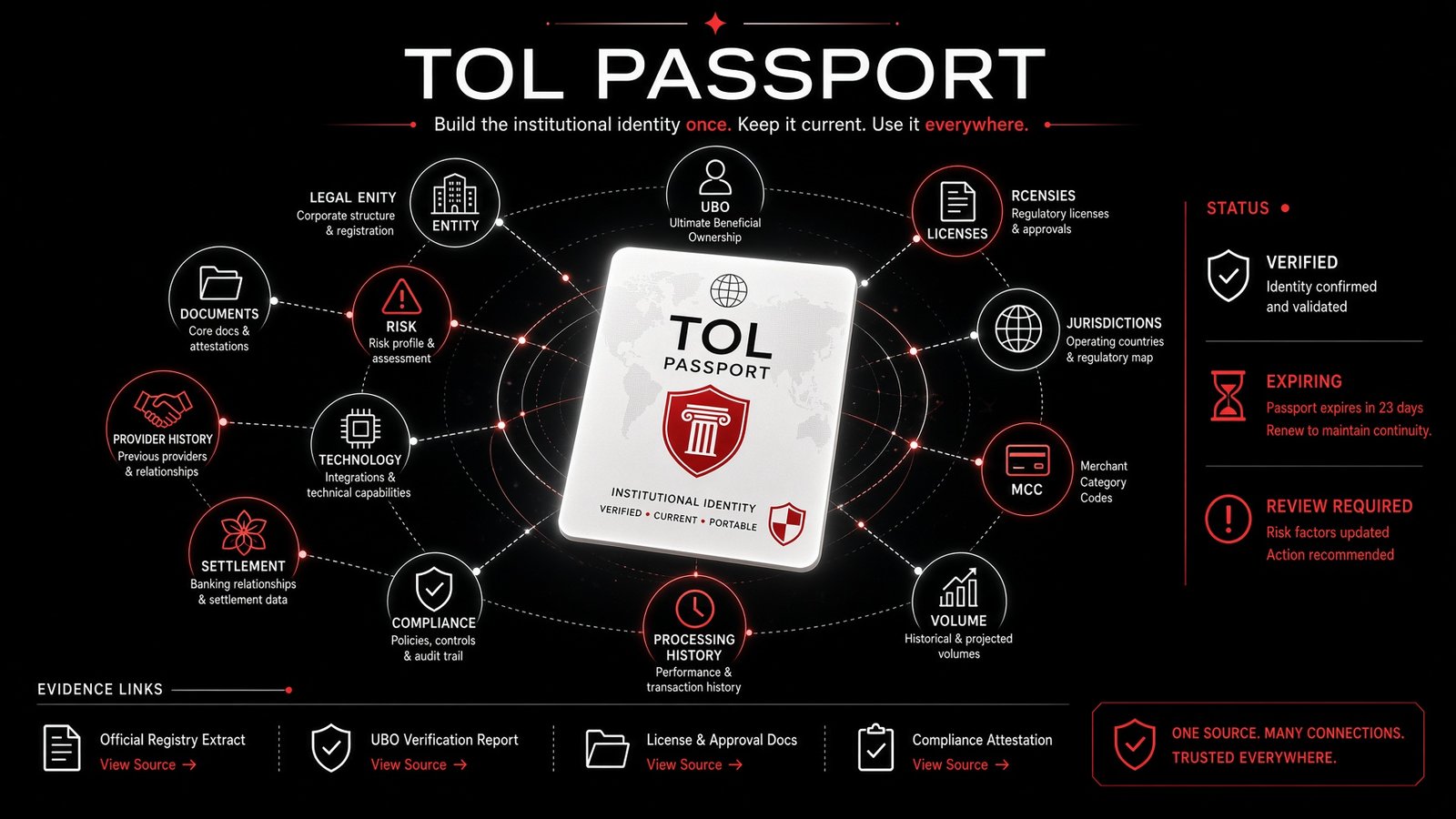
A worked example. Every row below is illustrative — the shape of the record, not a real company’s file.
Provenance and expiry, on every data point
A passport is not one score computed once and trusted forever. Every individual field carries three things: where it came from, when it was checked, and when it stops being valid. A license that was verified eighteen months ago is not the same as one verified last week, and the passport says so instead of hiding the difference behind a single green checkmark.
That is what “review required” and “expiring” mean in the ledger above — not a failed check, a dated one. A counterparty evaluating this passport can see exactly which parts of the file it can rely on today and which parts need a refresh before a deal closes on them.
Why this is the layer everything else depends on
The Visible Marketplace can only show real capacity and real demand if the participants behind them are real. The Lockbox can only seal a relationship worth sealing if the counterparty holding it has a verified identity attached. Private Matching can only rank routes by risk and fit if risk and fit are known quantities, not claims. The passport is what makes the other three layers trustworthy instead of just plausible.
Once a counterparty exists on the market with a current passport, the next question is how a relationship it holds actually enters the market without exposing it. That is the Lockbox.